History Of Food Of India
The history of food is quite an interesting and fascinating journey that intertwines with the human evolution, culture, and innovations. It spans from prehistoric times, when early humans moved from one place to another gathering nuts and berries. Then they learnt about meat consumption , to cultivation of crops like rice , wheat, barley, lentils in ancient times. Over the stretched span of years societies, economies, cultures, traditions and even wars have shaped our simple food into a vast variety of cuisine.
For example, the discovery of fire by humans also helped them cooking, while the agricultural revolution introduced farming practices that transformed diets.
Prehistoric Era: Agriculture began around 7000 BCE in the Indus Valley, with crops like wheat, barley, and sesame being cultivated. Spices such as turmeric, cardamom, and black pepper were also harvested.
The story of food in India begins in the Vedic period (1500–500 BCE), when food was intertwined with religion and rituals. The Rigveda, one of the oldest texts in human history, mentions the offering made to God of grains, milk, fruits, and vegetables . People lived in harmony with nature, and their diet largely consisted of plant-based foods. Dairy products like milk, ghee (clarified butter), and yogurt were their staples, alongside grains such as barley, wheat, and rice.
Meat consumption in ancient India was not an integral part of their diet. However, goat and lamb meat were consumed by some communities, particularly those who were warrior-based. The concept of vegetarianism, influenced by Jainism and Buddhism, also began to take hold, particularly in the north and central regions of India.
Mauryan Empire (321–185 BCE) during this time food began to take on new meanings. Under Emperor Ashoka, who embraced Buddhism, also called for people to become vegeterian. Ashoka’s emphasis on non-violence, compassion, and respect for every life reflected in their dietary practices. This marked a significant shift in Indian food culture, making plant-based diets more popular. Vegetarianism continued to grow in India, especially in regions where Buddhism and Jainism had a strong influence.
With the arrival of the Mughals (1526–1857) , India marked another transformative period in `food history. The Mughal emperors, with their Persian, Central Asian, and Turkish roots, introduced an entirely new dimension to Indian cuisine. The Mughal empire’s royal kitchens created some of the most iconic dishes still loved today, like biryani, kebabs, and kormas.
Mughal chefs blended native Indian ingredients with Persian cooking techniques, introducing rich gravies, fragrant rice dishes, and slow-cooked meats marinated in yogurt and spices. Ingredients like saffron, cardamom, and cinnamon became common in Mughal dishes, and these techniques continue to influence North Indian cooking today. The luxurious Awadhi cuisine of Lucknow and the Hyderabadi Biryani of the South are prime examples of how Mughal influence transformed regional food cultures.
The history of food in India is as rich and diverse as its culture. Indian cuisine has evolved over thousands of years, influenced by geography, trade, religion, and colonialism.
Indian cuisine reflects the diversity of its people. For example, vegetarianism became prominent due to Hindu and Jain philosophies, while Mughal rulers introduced rich dishes like biryani and kebabs
Today, Indian food is celebrated worldwide for its bold flavors and variety.
Food Of India
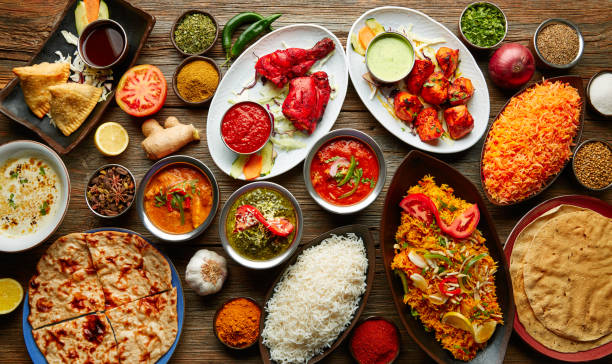
India is a land of diversified culture and tradition; this has been the reason for our vast variety of cuisine. Indian food is well known for producing unbelievable combinations of flavour. From tangy, spicy, rich, subtle, pungent, mild or hot.
Indian food is not just a reflection of the country’s diverse geography, it’s a story of its history, culture, and traditions. Each region offers a unique culinary identity, showcasing a variety of flavours, cooking techniques, and ingredients. From the spicy curries of Kerala to the desserts of Bengal, Indian food is a journey of bold tastes and timeless recipes
Food of India can be broadly classified into four regions:
- North India is known for its rich textured curries, tandoor cooked , and breads like naan and roti. Popular dishes include Butter Chicken, Rajma Chawal, and Chole Bhature.
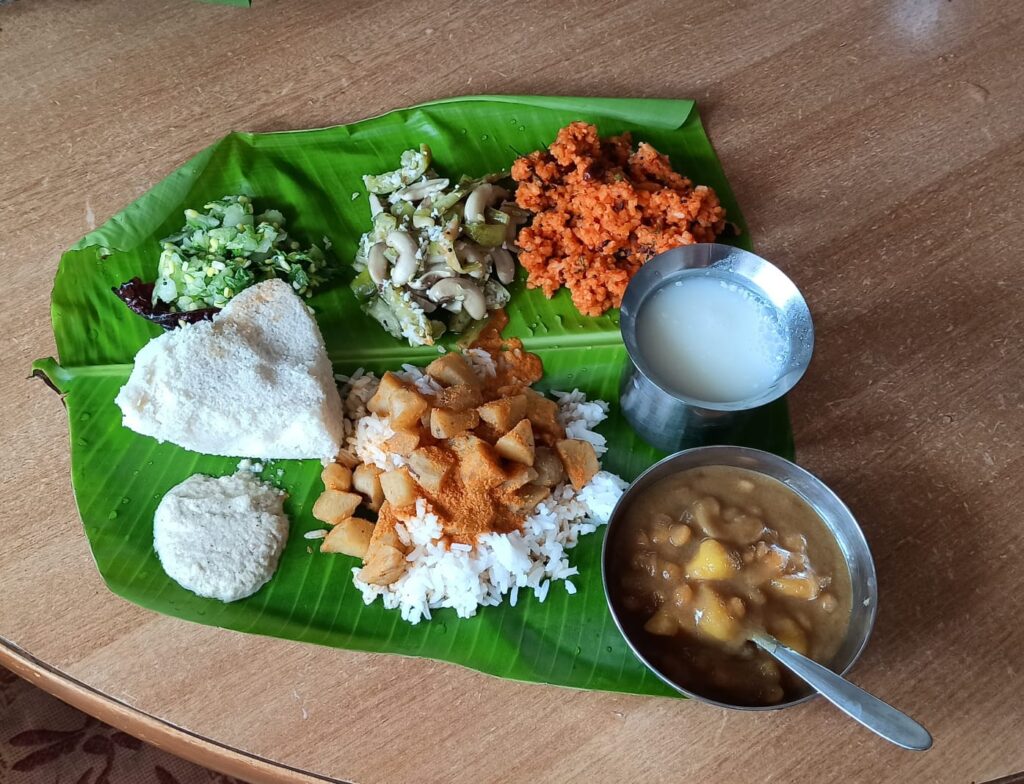
- South India is renowned for its rice-based dishes, tangy curries, and coconut flavoured gravies. Iconic recipes include Dosas, Idli , and Sambar.
- East India is famous for its sweets like Rasgulla, Mishti Doi, Sondesh and seafood delicacies like Prawn (Chingri) Malai Curry and also heartwarming homemade variety fish curries.
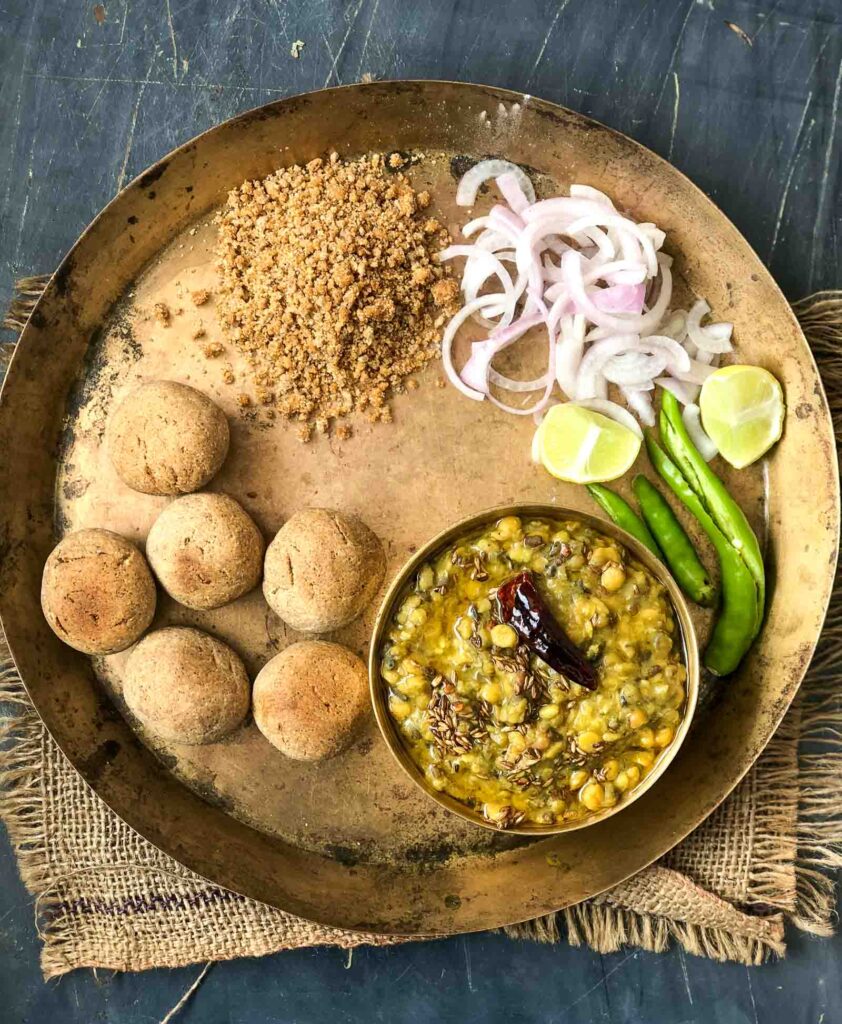
- West India is home to a huge variety of dry snacks,Pav Bhaji, Dhokla, missal pav , dal baati churma and Goan Fish Curry.
The food owes much of its magic to its spices and ingredients such as turmeric, cumin, coriander, black pepper, chilli and garam masala. Each spice has a purpose and it’s just not just for flavour, but also for health benefits. For instance, turmeric is known for its anti-inflammatory properties, black pepper reduces the risk of heart diseases and so on.
Meals are traditionally eaten on large plates called Thali. In Indian household meals are either eaten seated on the floor, or on very low stools or cushions. Indians use their hand rather than cutlery to eat their meals. In Southern India, cleaned banana leaves are used to serve the food. When hot food is served on the banana leaf it releases certain antioxidants which has a large number of health benefits for the human body. Banana leaves are also used on special occasions
Indian staple food includes rice, whole wheat flour, different variety lentils, beans. Lentils are cooked and consumed in different forms and are used almost daily. Pulses such as chickpeas, kidney beans and black-eyed peas are very commonly used in the northern part of India. Besan, a type of flour made from chickpeas is widely used throughout the country in variety of cooking.
Indian food is cooked in different variety of oils such as mustard oil in the east ,coconut oil in the south, vegetable oil is use all over the country but ghee (clarified butter) is popular in the northern part of India. Different types of meat are also consumed, chicken, goat and lamb tend to be the most common of them all. Fish and seafood is equally relished.
In a country with 28 states and hundreds of languages, cuisine differs across India’s diverse regions. Variations in local culture, geographic location and economics all have an impact. Food also changes seasonally, depending on which fruits or vegetables are ripe and what proteins and herbs are available.